

Discover financial empowerment resources
Discover financial empowerment resources
Saving is an important part of financial well-being. Saving money helps you manage short-term needs such as day-to-day spending. It protects you and your family during emergencies. It is the key to reaching your future hopes and dreams. These worksheets can help you think through what kind of...

This Government of Canada webpage contains links to resources to help you manage your money, debt and investments, plan for retirement and protect yourself from consumer...
There are many different actions that can be taken to improve financial wellbeing. The Financial Wellbeing Framework offers 17 entry points to action to inform government, organizations, policymakers, decision-makers, practitioners, and researchers in their efforts to address financial...

This report summarizes the first results from the Canadian Survey on Working Conditions. Explore how different kinds of workers experience core dimensions of quality of employment, including exposure to physical risks, emotional demands, work schedules and hours, time pressures, co-worker support,...
The Financial Consumer Agency of Canada (FCAC) has published research insights that reveal where Canadians are turning for various types of financial advice. FCAC’s Spotlight on Canadians’ use of financial advice showcases data from the 2024 Canadian Financial Capability Survey (the CFCS), a...
The 2025 Report of the National Advisory Council on Poverty is progress report on 'Opportunity for All' – Canada’s First Poverty Reduction Strategy. It presents views on whom people turn to when they need support, how they access services, and if the existing benefits and programs meet their...
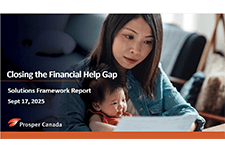
Canadians with low incomes lack access to the financial help they need to rebuild their financial health and resilience. Watch the webinar from September 17, 2025 as we present findings from our recent report: Closing the Divide: Solutions for Canada’s Financial Help Gap. Prosper Canada’s...
November is Financial Literacy Month This year marks the 15th anniversary of Financial Literacy Month (FLM) in Canada. Since 2011, FLM has helped Canadians strengthen their financial knowledge and skills with the goal of improving their financial well-being. Led by the Financial Consumer Agency...
This toolkit offers resources on budgeting, banking, money transfers, insurance and planning your finances at different life...
Tools to help you choose a bank account and credit card, including budget and mortgage...
The policy brief, Provincial spending on housing and homelessness in Ontario, presents a stark reality: homelessness in Ontario is worsening, with chronic homelessness nearly doubling in just two years. The policy brief finds that: Homelessness is worsening: Over 81,000 Ontarians experienced...

The Government of Canada has created a digital toolkit for Black History Month 2025. Click on "Access this resource" to download a Black History month poster, a virtual background for video...

York Region Plan to Support Seniors hosted an information series with John in late 2024. In these recorded sessions, John looks at what people need to know about retiring on a low-income, how to make the most of government benefits and other considerations. Session 1: What “low-income” means...
The Working Centre in Kitchener-Waterloo has been dedicated to aiding marginalized populations for over 40 years. In partnership with Prosper Canada, it embarked on an initiative to connect the populations they serve to government benefits and tax filing support. Recognizing the intricate...
In 2023, the Financial Consumer Agency of Canada (FCAC) and researchers from Carleton University developed and tested the effectiveness of brief, online interventions at improving the financial confidence, financial knowledge and positive financial behaviours of young women ages 16–25. To...
The CRA's Indigenous strategy takes inspiration from the United Nations Declarations on the Rights of Indigenous Peoples and contributes to the Government of Canada’s efforts to advance reconciliation. It presents an integrated approach to improve trust and ensure that our services are...
In partnership, Daily Bread Food Bank and North York Harvest Food Bank have released Who’s Hungry 2024 – an annual profile of poverty and food insecurity in the City of Toronto. In the last year, there were 3.49 million client visits to Toronto food banks – nearly 1 million more visits...
Low-cost accounts cost a maximum of $4 per month in banking fees. The Government of Canada and certain financial institutions have an agreement to provide low-cost basic banking services. If you meet certain conditions, you may be eligible for a low-cost account at no cost. No-cost accounts have...
The executive summary on the progress of Opportunity for All- Canada's First Poverty Reduction Strategy identifies the availability and affordability of safe and suitable housing, the ever-increasing cost of feeding one's family, the long hours and low wages of work to barely keep your head above...
Women and girls are highlighted within Canada’s National Financial Literacy Strategy as a diverse population that can benefit from tailored approaches to strengthen financial resilience. To help close the gender gap, the Financial Consumer Agency of Canada (FCAC) developed and tested the benefits...
The CRA has put together a website for what Indigenous Peoples should know about the tax return they send to the Canada Revenue Agency (CRA), and how that return can result in various benefit payments. This includes information on tax exemption and who is eligible. There is also information on...
Almost all participants (Canadians and community-based organisations (CBOs)) voiced support for the idea of automatic enrolment because it would improve access to the benefit by streamlining the enrolment process for all eligible recipients. As eligible youth are from families experiencing low...
Struggling to pay your mortgage? FCAC expects federally regulated financial institutions to help you if you're struggling to pay your mortgage due to exceptional circumstances. Learn more about paying your mortgage when experiencing financial...
As the growth in the number of renter households in Canada outpaces the growth of homeownership,2 tenants, property owners and researchers are sounding the alarm that more can and must be done to recognize the right to adequate housing in Canada. Central to these calls is a better understanding...
The disability tax credit (DTC) is an important program for those facing severe and prolonged physical or mental impairment. Some individuals face unique barriers when it comes to completing their application and claiming the credit. On this page, the CRA is correcting some of the most common myths...